

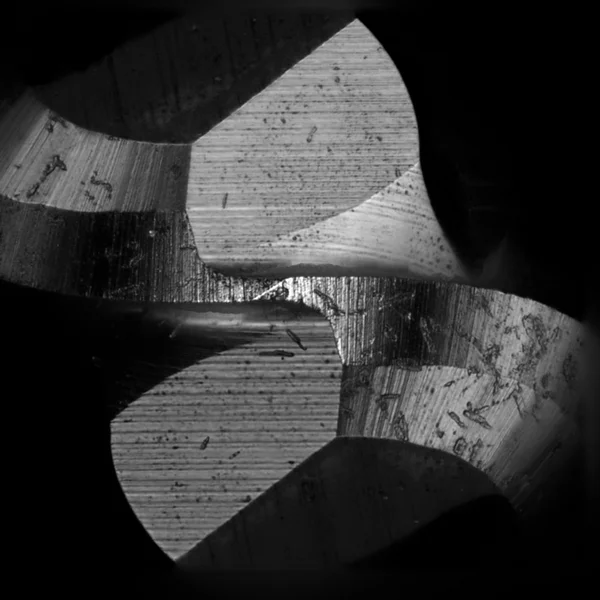
Measuring and testing devices are just as important as the associated software.
In order for tools to do exactly what they were designed and constructed for, they must themselves be manufactured with precision. With our Universal measuring machines, tools can be measured with micrometer accuracy and checked to ensure they correspond to the requirements.
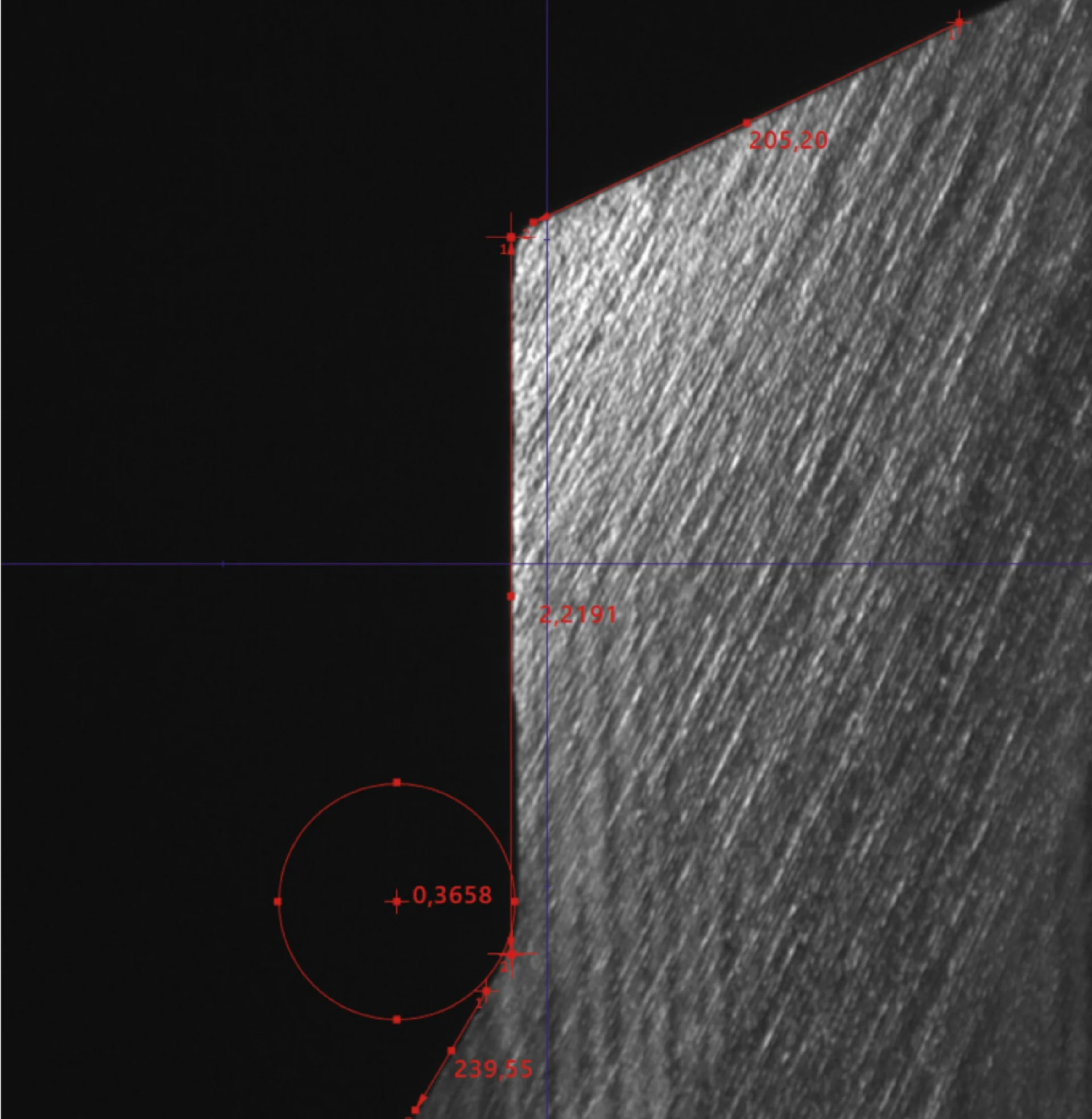
Measuring in the coordinate measuring system
The measured probe points are assigned by the measuring machines to a specific length measuring system along a specific traverse axis. The measuring software then processes this information and assigns it to specific points in the entire coordinate measuring system.
The CMM software then uses the coordinates determined in this way to calculate the values for quantities that are not measured directly, such as lengths, angles, distances between two measuring points, etc.
The measuring points (actual values) determined in the coordinate measuring system are then compared with the values resulting from the specifications, such as the designs for the tool (nominal values). If these do not accord, i.e., if there are measurement deviations – whether due to production errors or wear and tear – appropriate action can then be taken.
What are 3D measuring machines?
"3D measuring machines" are usually measuring machines that can measure the three-dimensional dimensions of a measurement object in a relatively short time, ideally in real time. When compact linear or matrix array cameras are used, some of these testing machines can even be portable or at least transportable. However, portable CMMs are generally somewhat less accurate than conventional testing machines.
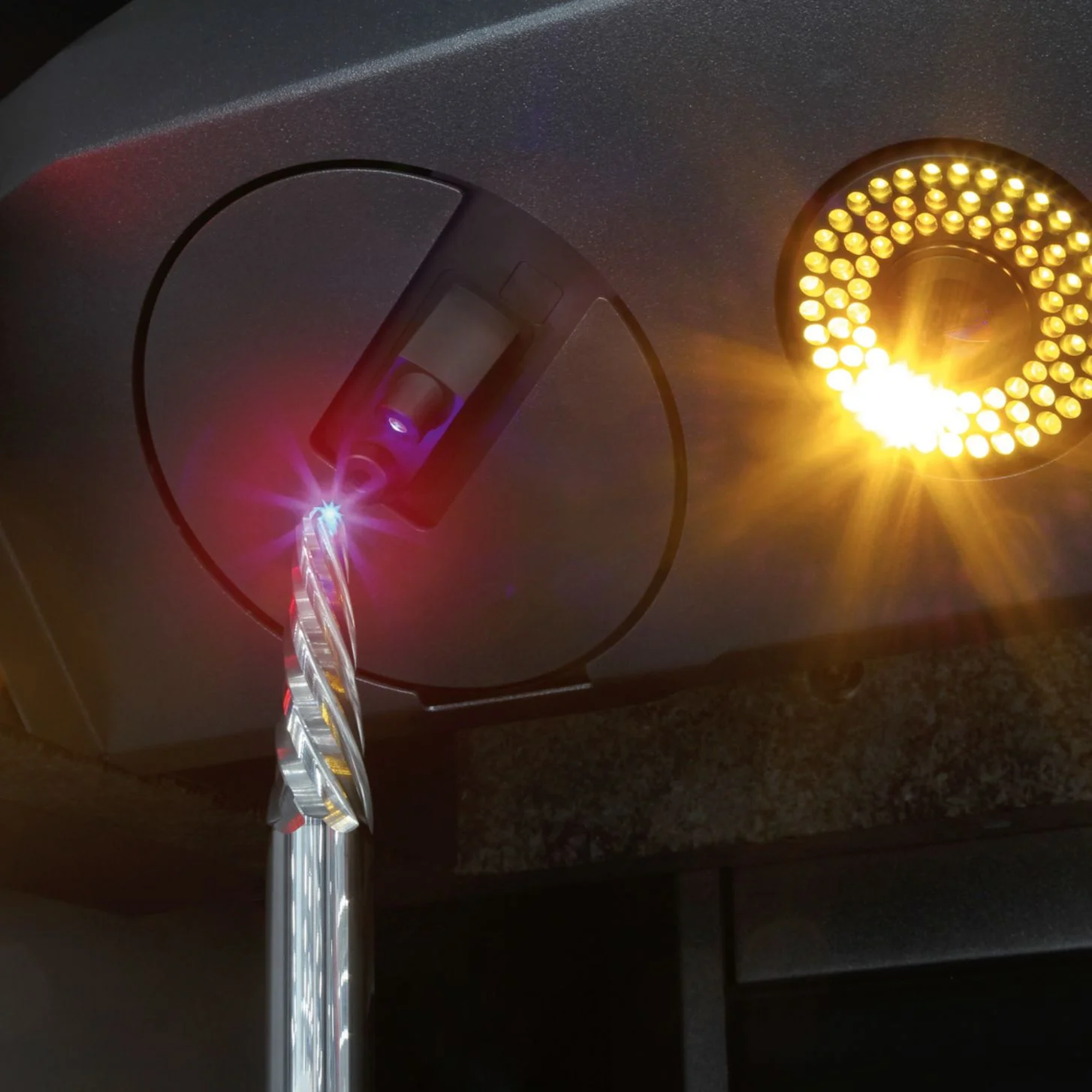
coordinate measuring technology
Many measuring machines work with what is known as coordinate measuring technology. The measuring machine (the full designation is then "coordinate measuring machine," CMM) uses a suitable sensor to enter the exact coordinates at which certain points are located on the surface of the workpiece.
In most cases, the coordinate system is created parallel to the orthogonal traverse axes of the coordinate measuring systems.
Non-contact probing
Non-contact probing, on the other hand, uses cameras, laser triangulation sensors, and other methods, such as optical|visual or electrical sensors. In this case, the measuring process takes place without the measuring sensor coming into contact with the workpiece at all. Under certain circumstances, this can significantly speed up the measuring process.
Tactile probing
Measuring sensors or stylus probes are used for tactile (mechanical) probing of workpieces; a distinction is usually made between switching systems (which can only distinguish between the idle state and touch) and measuring systems (which can measure deviations within a narrow area).
Multi-sensor technology
Multisensor coordinate measuring machines combine different probing methods in order to not only achieve especially accurate results, but also to provide a particularly suitable measurement method for every requirement.

Select language
Europe