

|


Greater precision, less setup time with »venturion«
KM Optimizes Production with ZOLLER
It has been approximately 10 years since KM Co., Ltd., a manufacturer of machine parts in the Hiroshima region, introduced the ZOLLER »venturion« tool presetter at its parts factory. How has this high-precision tool presetter, operating continuously as a vital asset on the shop floor for so long, contributed to improving machining accuracy and reducing costs? Through interviews with on-site personnel, its true value has become clear.
Background and Challenges
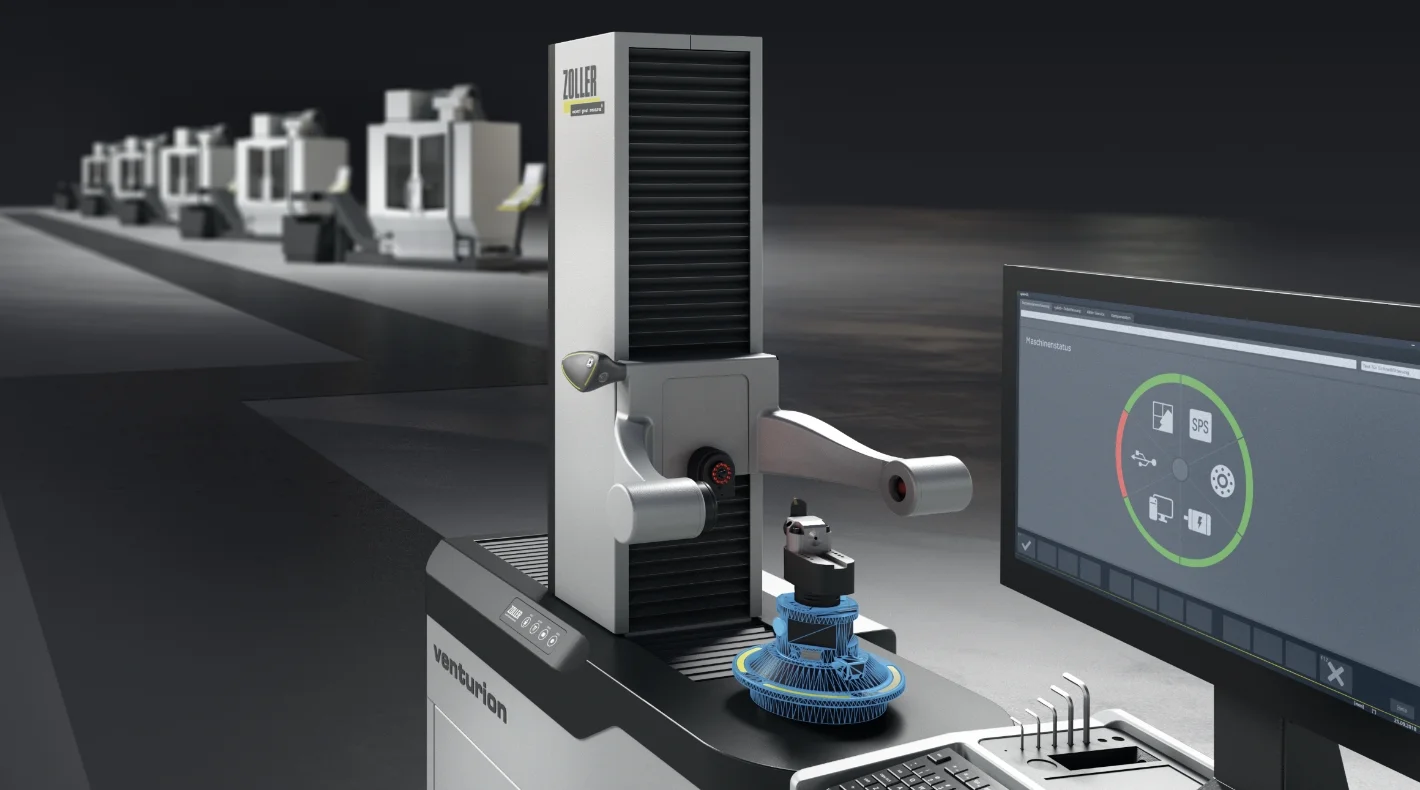
Before implementation, machining at the site was conducted amidst significant “uncertainty”. No means existed to measure special complex-shaped tools, making the correct approach unknown until actual cutting began. The “runout” of the reamer itself adversely affected the accuracy of the finished hole. There was always a risk of machine collisions due to tool data input errors. Once an accident occurred, it would lead to substantial repair costs and line stoppages.
Quality Assurance for Special Form Tools
These complex, high-cost form tools, where angles and step lengths directly impact results, previously lacked measurement methods. This created the risk of discovering defects only after lengthy machining runs. venturion’s implementation enables “visualization” of tool angles and shapes before machining. Even if a tool supplied by the manufacturer is defective, the system can detect and flag it before use.
Switching from Reamers to Boring Bars
Particularly impressive during this visit was the dramatic improvement in finish hole machining. Previously, this site used multiflute reamers for finishing operations, but faced a persistent issue: tool “runout” negatively impacted machining accuracy. To resolve this, switching to boring bars was considered. However, boring bars had inherent drawbacks. Each insert change required precise diameter adjustment, and the process of “cutting slightly undersize, measuring, then finishing” had to be repeated multiple times. This setup consumed enormous time, making the switch difficult. The solution to this dilemma was »venturion«, with its high-precision measurement capability.

Outstanding Measuring Accuracy
The introduction of »venturion« enabled the critical diameter adjustment – the greatest drawback of boring bars – to be perfectly completed during “off-machine setup” before loading onto the machine. Since fine adjustments down to 0.001 mm can be made on the presetter, “one-shot machining” became possible. This eliminates the need for any reworking or trial cuts even after a new insert is installed.
Effective Time Savings
Tasks that previously took over an hour due to reamer runout or boring bar adjustments are now completed in about 10 minutes. This eliminates the precision concerns associated with reamers while brilliantly overcoming the low productivity weakness of boring bars.
Less Stress for Skilled Workers
The repetitive cycle of machining and measurement not only halted machine operation but also imposed significant psychological strain on operators. With »venturion« providing backed-up numerical data, operators can now press the start button with confidence, knowing it will be “done right the first time”. This achieves both mental reassurance and reliable output.
Zero Collision Accidents Through Data Integration
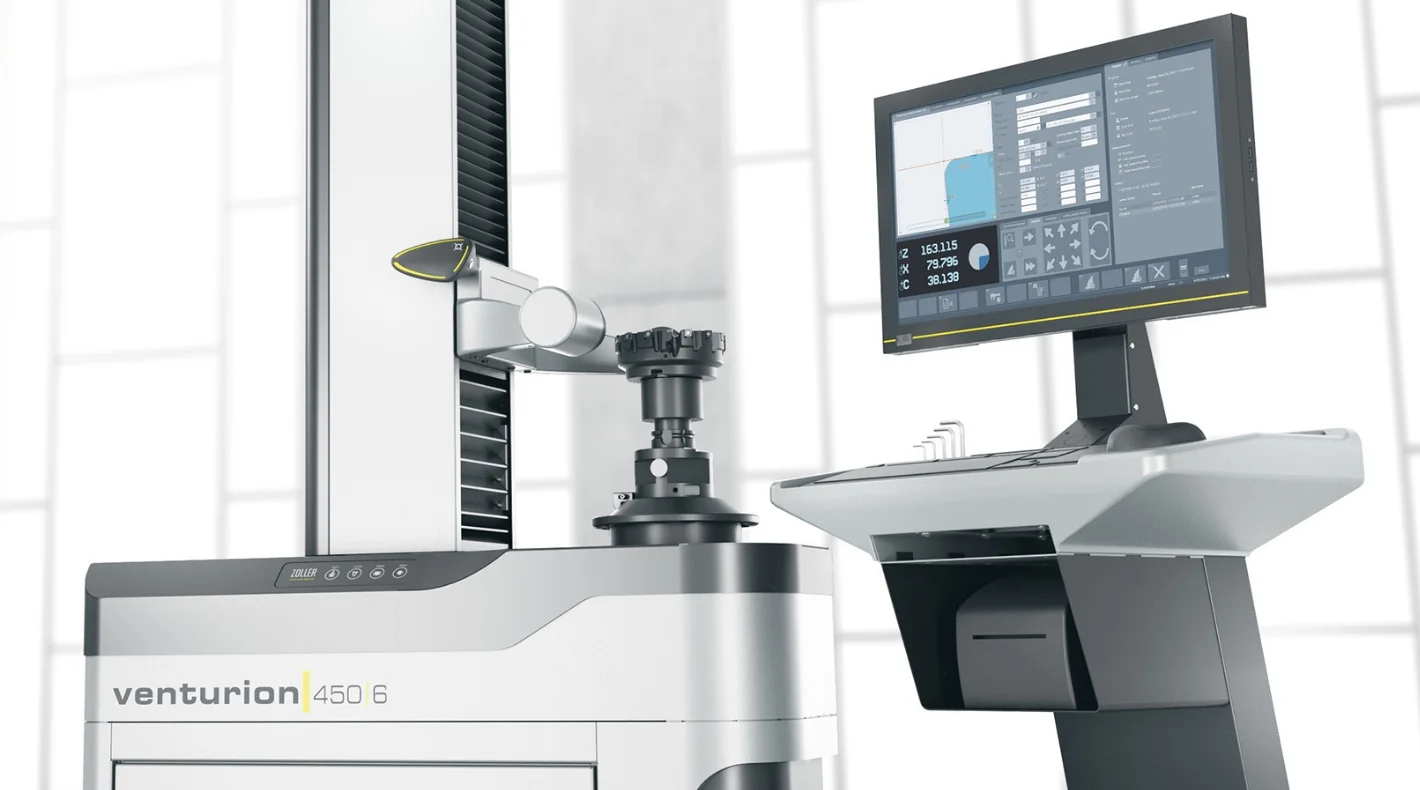
On the shop floor, venturion is linked with three Mazak machine tools. The system ensures precise tool information measured by »venturion« is directly and reliably transferred to the machines through the interface, “smooth tool management”, completely eliminating errors from manual input. Without this system, tool collisions with workpieces would have occurred, leading to spindle repairs costing over EUR10K and prolonged machine downtime. This “peace of mind” is one of the points most highly valued by the shop floor.
Stable Tool Life and Cost Management
Amid ongoing price hikes for tool materials like tungsten, managing tool “runout” at the micron level has become increasingly critical. By minimizing runout with »venturion«, machining stability improves and tool life extends. This significantly contributes to suppressing monthly tooling costs. The »venturion« is so trusted that even team leaders on the shop floor express sentiments like, “We can‘t do our jobs without this,” and “We need another one.” While difficult to quantify, the benefits – including loss compensation from accident prevention, reduced setup time, and the psychological reassurance of “knowing we can reliably produce high-quality parts” – are evaluated as delivering a return on investment far exceeding the initial cost.
Future Outlook
Moving forward, this successful model is expected to be rolled out to other lines and factories. Particularly in the production of core components requiring high-precision machining, the tool presetter will continue its role not merely as a “measuring instrument,” but as the factory’s “guardian protecting uptime.”

 Back to overview

Select language
Europe