

Tool presetter drives $1 million increase in revenue
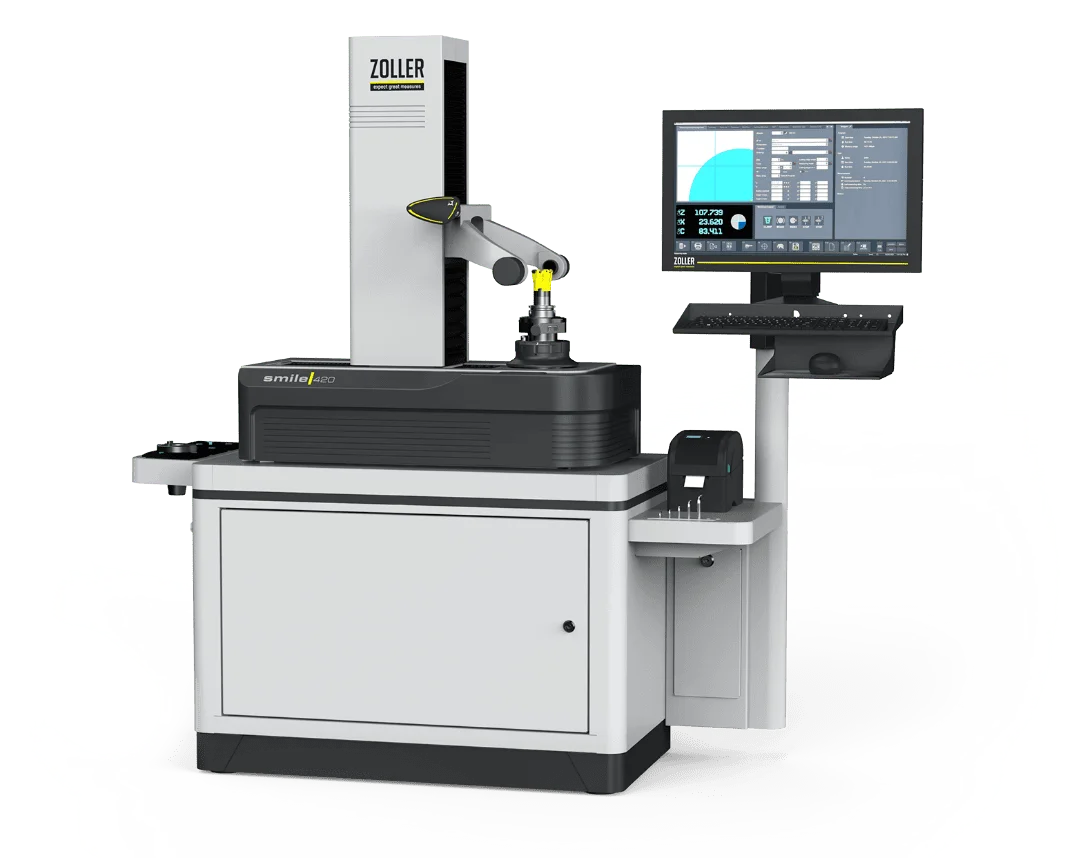
ZEELAND, MICHIGAN — How ProCam Services optimized its processes and expanded its business with the ZOLLER »smile 420«.
|


ZEELAND, MICHIGAN — How ProCam Services optimized its processes and expanded its business with the ZOLLER »smile 420«.
If you ask a group of machine shop owners about their goals, they will likely all say they want to reduce setup times, speed up retooling, and increase machine uptime.
But if you ask those same business owners what technologies they use to work more efficiently, the answers are very different.
As the ongoing shortage of skilled workers in the manufacturing industry fuels interest in productivity-boosting solutions, more and more small and medium-sized operations are recognizing the cost-saving potential of tool presetters. These external measuring systems enter tool lengths, diameters, and offsets before the tools are installed in the machine.
“It’s not uncommon for us to meet shop owners who mistakenly believe that presetting devices aren’t for them,” explains Dietmar Moll, Sales Manager at ZOLLER Inc. in Ann Arbor, Michigan. “But as soon as the device is on the shop floor and they see the results, we often hear them say, ‘We wish we’d bought this sooner.’”
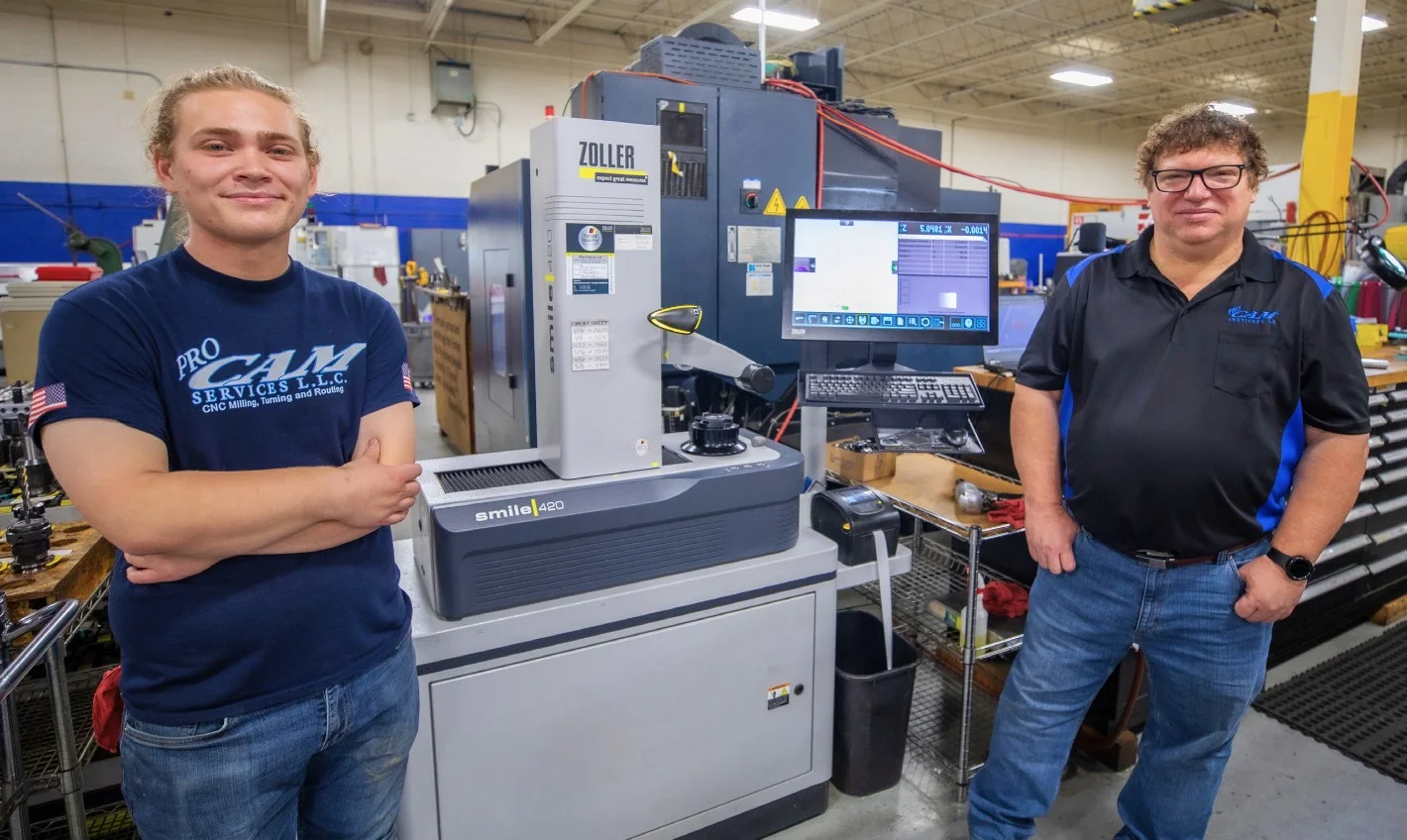
That’s exactly what happened to ProCam Services LLC, a family-run CNC contract manufacturer founded by Tom Bassett II nearly 30 years ago in western Michigan. Initially skeptical of tool presetting devices, his doubts quickly vanished after he purchased the ZOLLER »smile 420« about five years ago and integrated it into the workflow of his busy operation.
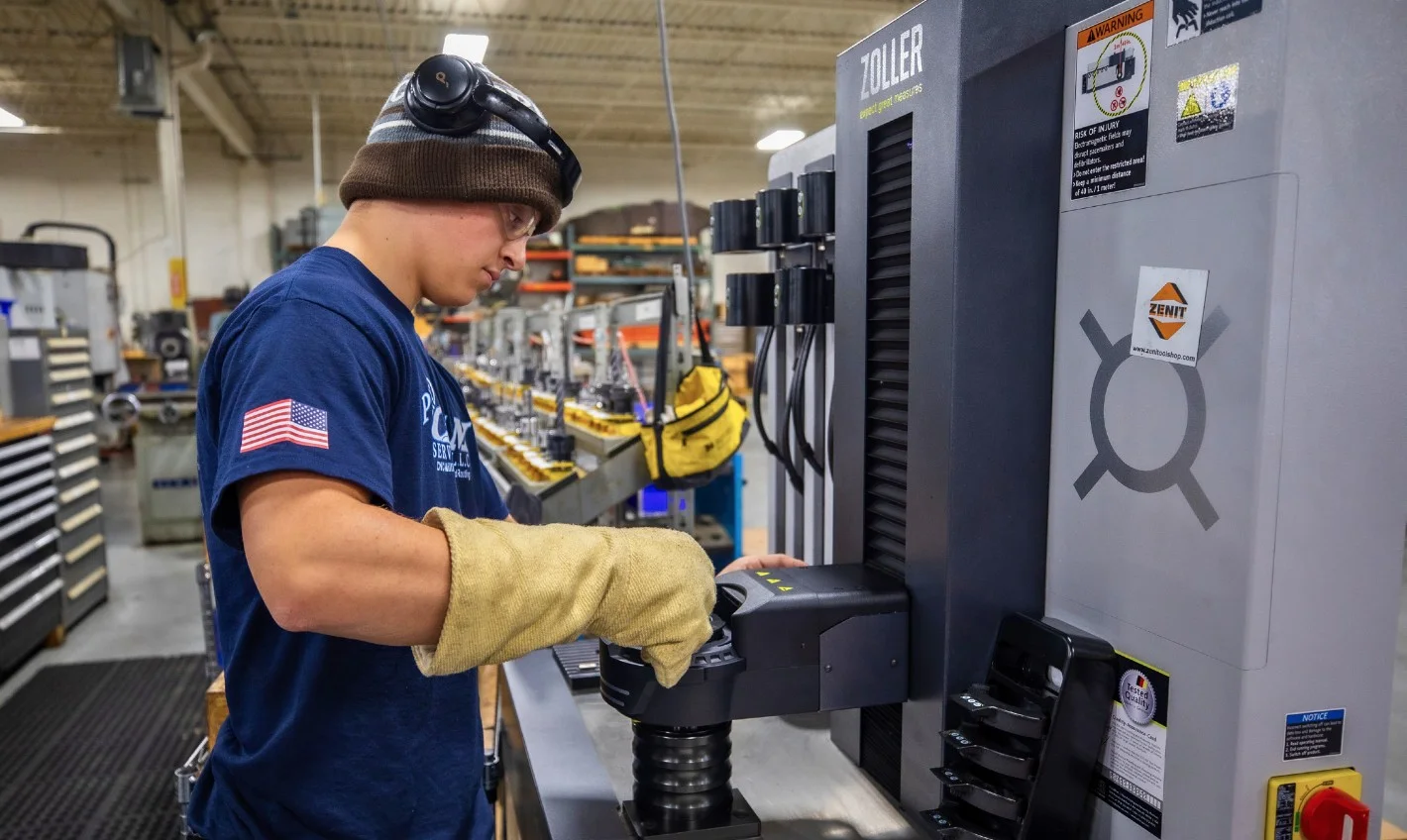
The machine measures cutting tools with micrometer precision in just a few minutes. Internal ZOLLER tests show that measurement with a tool presetter is at least 45% faster than via the machine control system. External setup relieved the machine operators, who previously spent valuable spindle time probing the tools. Now, an operator can measure the tools for the next order while the machine is still running, allowing ProCam to gain additional production time.
Already in the first year after introducing the tool presetter (2019), revenue increased by $300,000, and by another $700,000 the following year. Bassett attributes the majority of the $1 million increase to more efficient processes and increased machine productivity.
“I don’t think I’ve ever purchased a device that has changed our work so fundamentally,” says Bassett. “There are many things where you think: We should have bought that sooner—but nothing has had as much of an impact as the ZOLLER.”
Bassett’s current opinion differs significantly from his earlier one. For a long time, he was convinced that presetting devices were unsuitable for operations with many different, small orders and frequent exchanges.
Since its founding in 1995, ProCam has positioned itself as a flexible contract manufacturer that excels with short lead times and the highest quality. Employees process 20 to 30 different orders daily for industries ranging from aerospace and automotive to agriculture.
The 3,500 m² operation is equipped with eight milling machines (3-, 4-, and 5-axis machines, vertical and horizontal), three lathes—including one with six axes—and two CNC milling centers. This equipment allows for maximum flexibility with a wide variety of materials and batch sizes.
“Some customers call in the morning because their system is down—and by the afternoon we’re already delivering the spare part,” says Bassett. “We usually only have about a two-week backlog because we get through orders so quickly.”
Every minute spent on setup is a minute the machine isn’t making money. So it’s no wonder that, according to Gardner Intelligence’s 2019 Top Shops Survey, more profitable operations use tool presetting machines more frequently. According to the survey, 55% of operations with more than $180,000 in revenue per employee (an indicator of high profitability) use a presetting device—compared to just 29% of the least profitable operations.
Bassett did the math himself: How much time does his team spend each day probing tools and checking concentricity? The result: 30 to 60 minutes per order. Multiplied by the number of orders per day and machine hours, this resulted in an enormous loss of time—and correspondingly high opportunity costs. “At first, I thought that couldn’t be right,” he recalls. “But then it became clear: We simply have to have this device.”
Today, tool presetting with the »smile 420« is the first step in every order at ProCam. In addition to significant time savings, the machine delivers repeatability that cannot be achieved manually. The high-precision SK-50 spindle, optics, and image-processing camera deliver exact data with every measurement.
“We used to have major deviations between shifts,” says Bassett. “The day shift measures differently than the night shift—and that leads to quality issues or rework. With the ZOLLER, that doesn’t happen anymore because every measurement is identical.”
The measurement data is automatically transferred to the machine control system, so typos are out of the question. Bassett even developed his own program to transfer the data to multiple machines simultaneously. “The system is now so deeply integrated into our process that we’re much more flexible than before,” he says. “I can’t even imagine working without it anymore.”
Although the numbers were convincing, Bassett also had to convince his machinists of the new system’s benefits. Until then, everyone had been using their own methods—with feeler gauges, 1-2-3 blocks, or paper strips.
“When they perform radial run-out inspection, it takes one to five minutes per tool—with 15 tools per order, that quickly adds up to 45 minutes,” explains Bassett. “With ZOLLER, we’re done in under five minutes.”
One especially skeptical employee was allowed to make the comparison: He should probe his tools “the old-fashioned way” and compare the results with those from the presetter. “I said: Prove to me that the device lies wrong,” Bassett recalls with a laugh. “After a week, he wasn’t manually probing anything anymore.”
Today, the entire team trusts the »smile 420«. “It’s simple—it takes work off our hands,” says Alex Bassett, shift supervisor and son of the company’s founder. “You have so many things on your mind—so it’s good to know: The ZOLLER is right. That gives us peace of mind and safety.”
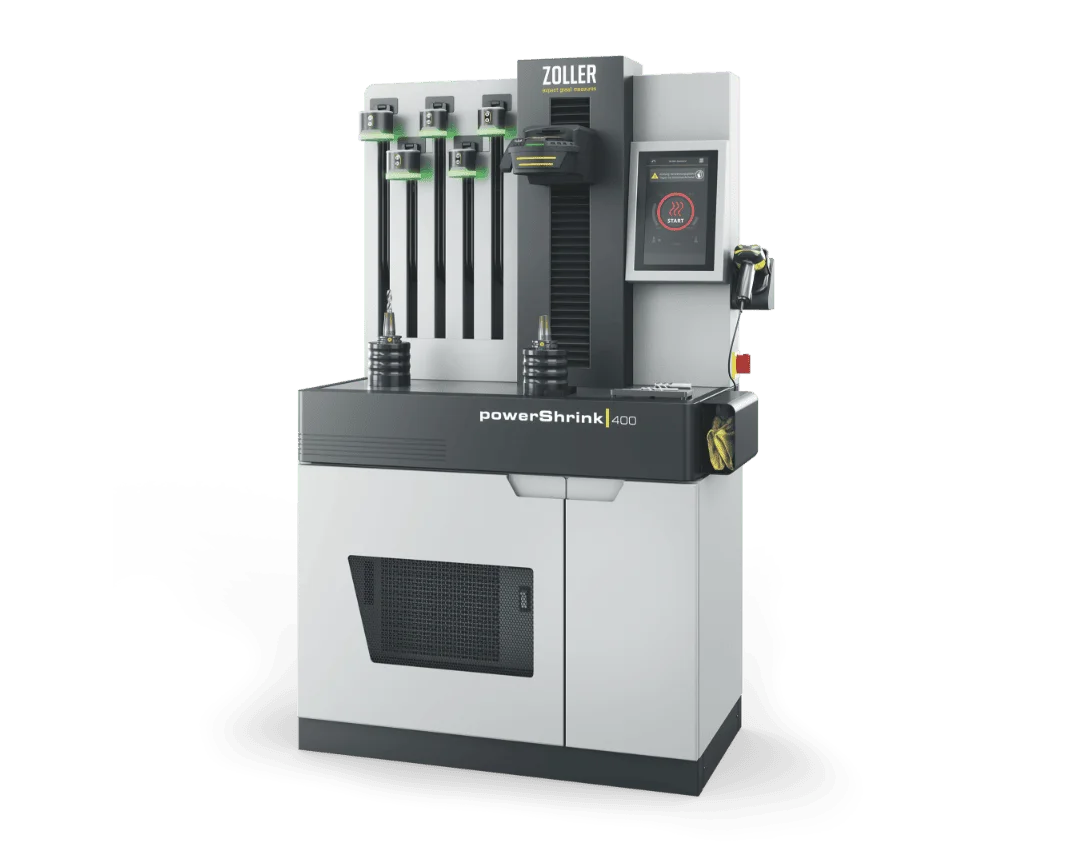
In addition to the tool presetter, Bassett has also purchased ZOLLER tool holders and, following IMTS 2022, the »powerShrink 600« shrink-fitting machine. “We’re still in the early stages, but we’re already seeing significant improvements in tool life as well as in cutting speeds and feeds,” he says. “Our tool life has roughly quadrupled.”
Alex Bassett is also enthusiastic: “The tool runs more stably—no wobble, no chatter marks—and the surfaces are significantly better. It has a simple positive effect on everything.”
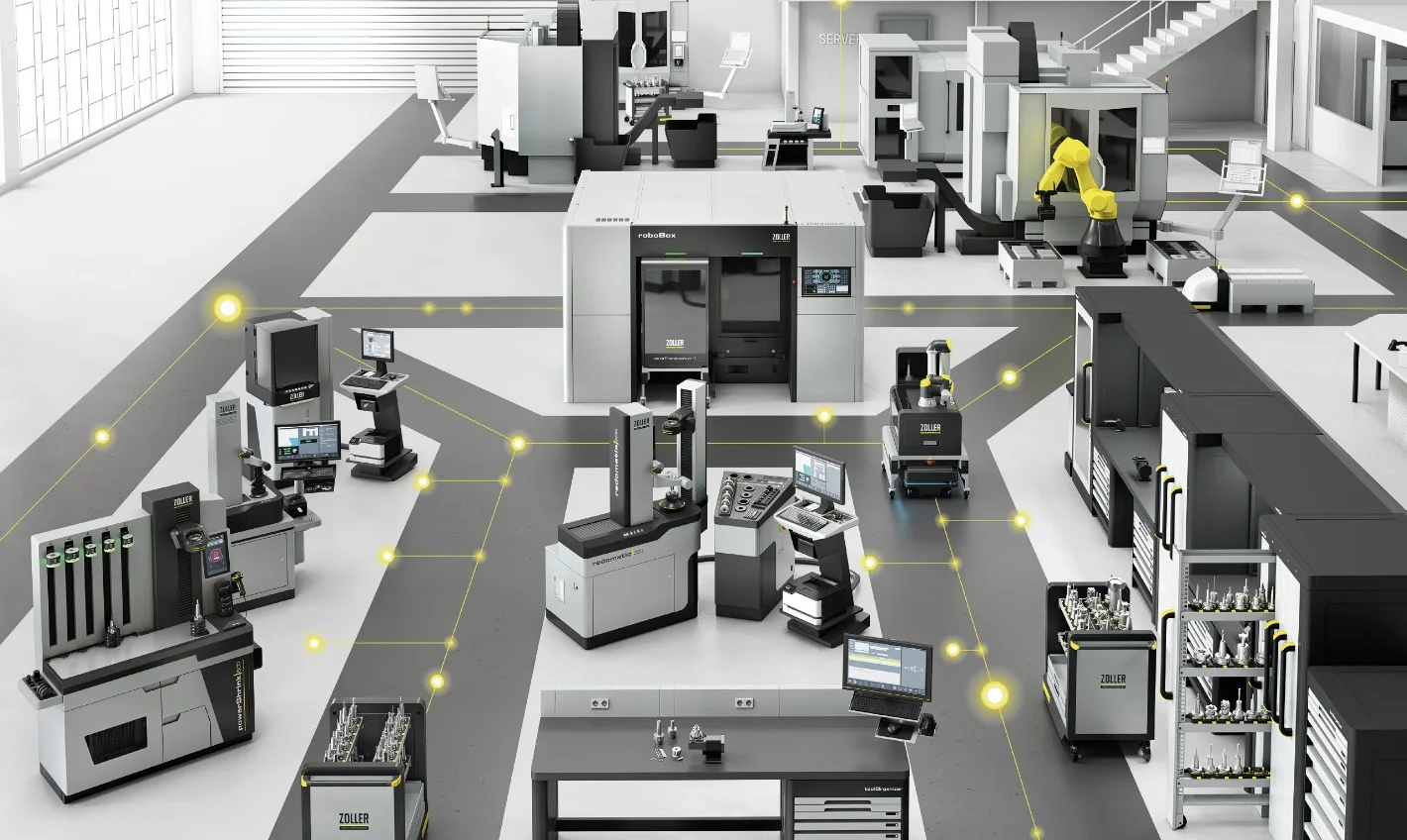
According to Dietmar Moll, after purchasing a tool presetter, many companies discover other solutions from the ZOLLER portfolio that further improve their processes. “The presetter offers the best cost-benefit ratio—low investment, big impact,” says Moll. “But with ZOLLER, you’re not just buying a device; you’re gaining access to a complete ecosystem of smart manufacturing solutions—and to a strong partner who shares in the customer’s success.”

Europe
 Back to overview