

|


For decades, conventional wisdom said you only needed a tool balancer for high-speed machining operations, which typically start at spindle speeds of 8,000 to 15,000 rpm.
Recently, however, the conversation has shifted. More manufacturers are seeing the benefits of using a tool balancer at slower speeds — although many are still hesitant to invest.
Buying a tool balancer requires an additional upfront cost and an extra step in the manufacturing process, so companies often circle back to the same questions they were asking before: When do you really need tool balancing? Is tool balancing worth it?
Here’s what you need to know:
Why should you use a tool balancer?
Matt Brothers, Industry 4.0 Tech Center Manager at ZOLLER Inc., says tool balancers save manufacturers on costs by improving productivity and reducing wear.
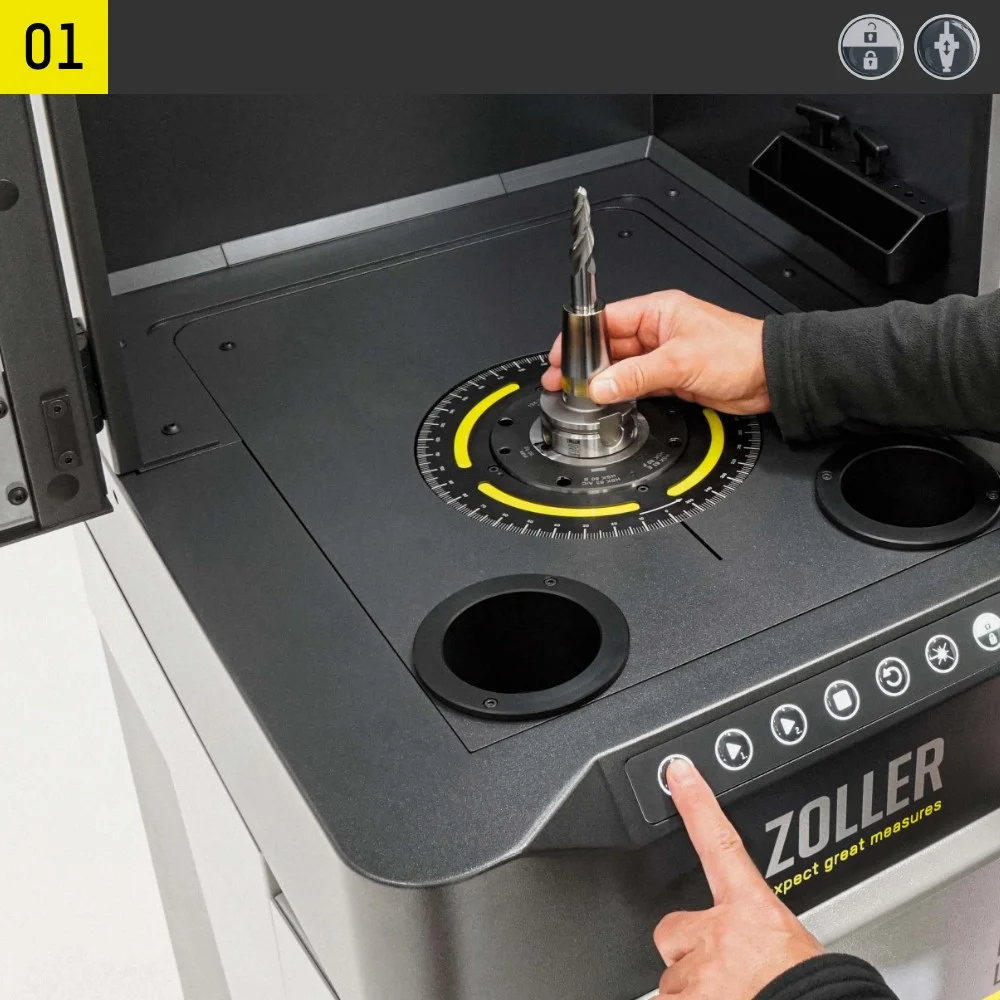
An unbalanced tool creates centrifugal forces that cause vibration, which puts more wear on the spindle and compromises tool quality. With a tool balancer, however, an operator can assess the tool and make corrections to any imbalance before it enters the CNC machine.
Increased tool life
The vibration from an unbalanced tool distributes force unevenly across cutting edges, wearing down the part faster and making it more likely to break.
With a balanced tool assembly, force is distributed more evenly across the entire tool. Because each cutting edge shares the workload, wear is more consistent, which extends the tool's life and leads to fewer tool changes and less downtime.
Better surface finish
Surface finish is affected by how smoothly a cutting tool rotates. If there’s vibration, the tool can leave chatter marks, waviness, or other inconsistences. This can be costly and time-intensive to fix, especially if you’re working for an industry with tight tolerances. In some cases, the part may even have to be scrapped completely.
A tool balancer ensures the first part is a good part by minimizing vibration and keeping cutting edges more consistent. It creates cleaner cuts and improves accuracy for a surface finish that looks smoother and functions more effectively.
Protected spindles
A spindle is one of the most valuable parts of a CNC machine. An unbalanced tool assembly puts extra force on the spindle bearings, which can accelerate wear and slow down production. It’s been reported that 7 to 20 percent of downtime is due to tool wear.
Using a balanced tool assembly allows the spindle to operate under smoother, more controlled conditions. This helps extend the spindle’s life and lowers the risk of expensive repairs.
Tips for tool balancing
Consider your shopfloor layout. Ideally, your tool balancer should be kept in a stable environment near the CNC machine, so operators can easily pivot between tasks. Look for a tool balancer with a sturdy base that will prevent any vibrations from the shopfloor transmitting to the spindle.
Choose a certified tool balancer. Not all tool balancing machines are built the same. Check and verify that equipment is calibrated and certified to recognized industry safety standards, like UL/CSA.
Consider toolholder quality. If a toolholder has excessive runout, worn clamping surfaces, or manufacturing inconsistencies, balancing alone won’t get you a good result. Make sure to use toolholders made of high-quality materials with tight tolerances.
Train operators on best practices. Structured training ensures operators know how to assemble tooling, input data, interpret results, and verify corrections before sending tools to the machine. Aligning your team with a standardized process also improves consistency across operators and shifts.
How to pick the right tool balancer
When choosing a tool balancer, consider the weight and dimensions of your tool assemblies. On the most basic level, you’ll want a machine that is compatible with your tool holder taper interface, large enough to accommodate your tool holder assemblies, and capable of precise measurements. It’s also important to consider the user-friendliness of each model, which can impact productivity.
The ZOLLER »toolBalancer« for example, has an ergonomic design with intuitive software that lets operators work with safety and speed. It has a 17-inch diameter workspace and can accommodate tools up to 550 mm-750 mm in length, with balancing results capable of < 0.4 gmm.
Tool balancing for the modern era with the ZOLLER »toolBalancer«
FAQ
What is tool balancing?
Tool balancing is the process of identifying and correcting any uneven weight in a tool assembly or tool holder. If an imbalance is found, operators can either add mass with balancing rings and screws or remove mass by drilling or grinding.
How does a tool balancer work?
A tool balancer works by clamping a tool assembly or holder and running a cycle. The operator then unclamps the tool, rotates it 180 degrees, and re-clamps it to run a second cycle. The tool data will populate and indicate whether the tool is unbalanced.
Standard tool balancers will tell you what the variation in weight is, but advanced machines, like ZOLLER »toolBalancer«, will also show you the location of the discrepancy.
 Back to overview

Select language
Europe