
Higher cutting performance
Longer tool life
Better component quality
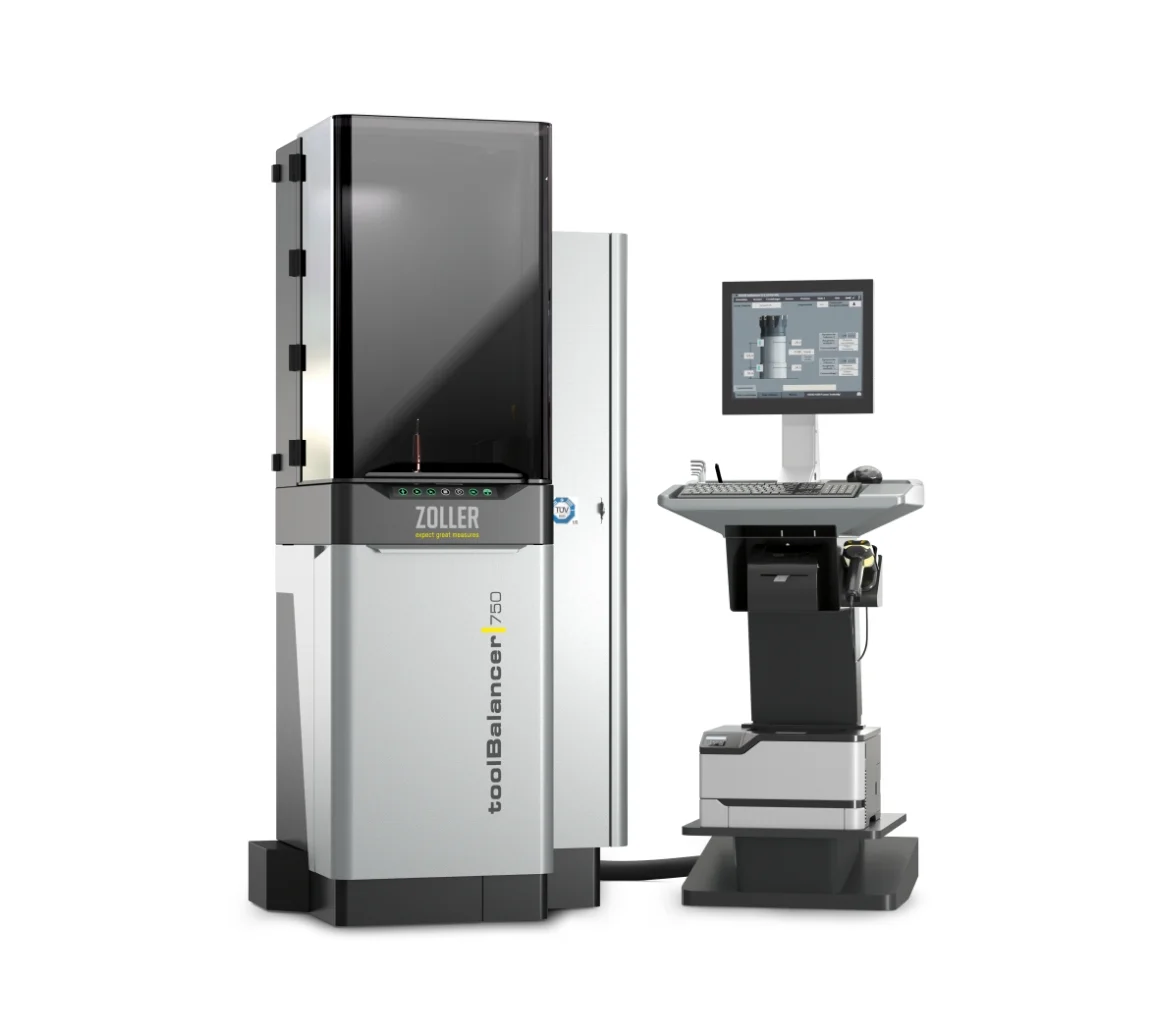
Long balancing times cause downtime and loss of quality. With our »toolBalancer«, not only can tool-holding fixtures, grinding wheels, and rotors be balanced with high precision—its automated measurement sequence also significantly speeds up the process.
Your current requirements can be taken into account, as well as developments that you cannot yet assess: thanks to its modular design, the »toolBalancer« can be adjusted/adapted to suit your individual needs.
The tool balancing machine can be used intuitively and self-explanatorily via touchscreen, keyboard, or mouse—whichever suits your working style best. This allows you to concentrate on working and producing effectively, to a high standard of quality. You can measurably reduce your scrap rates, machine downtime, and production costs!
Balancing reduces or, ideally, corrects existing unbalances that occur in any rigid body that is rotating around a fixed axis. The unbalances are caused by uneven mass distribution in the grinding wheel; the reference point in each case is the axis of rotation of the grinding spindle. The main goal of balancing is to perform correction for all centrifugal forces acting on the rotating spindle so that the spindle bearing is not subjected to any additional forces.
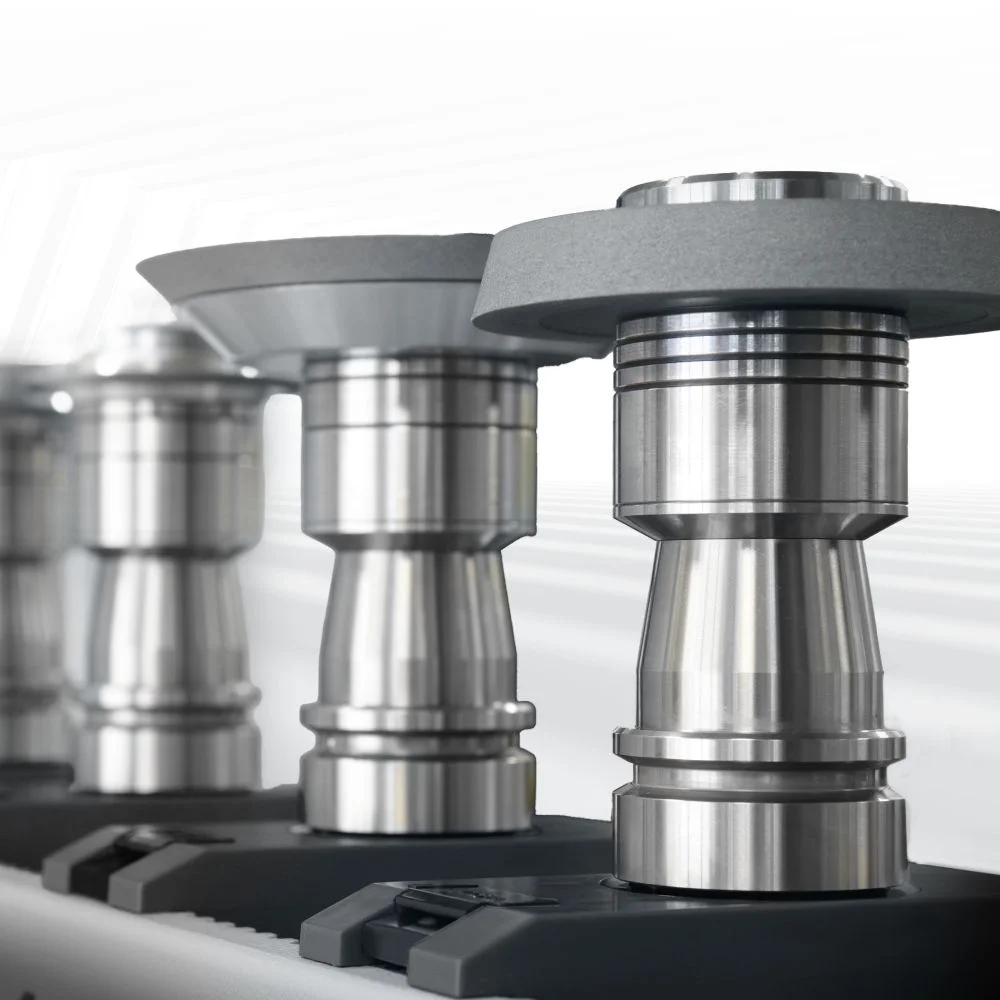
Unbalances in a grinding wheel can already occur during manufacture, for example:
However, unbalances are primarily caused by wear and tear during the grinding process. Examples of this are:
Additional problems can arise from improper storage or incorrect handling of the grinding wheels.
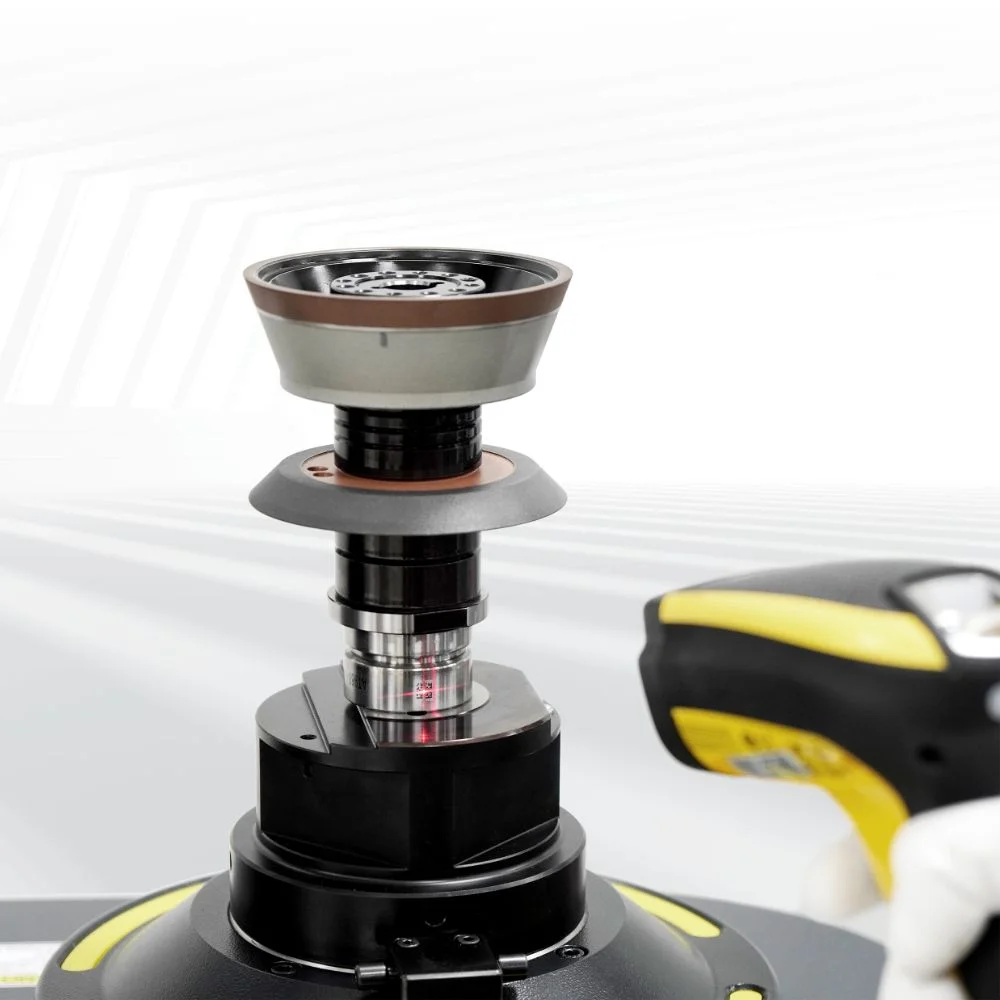
The consequences of an unbalanced grinding wheel can be manifold: The grinding spindle may not rotate quietly and consistently (smooth running); an unbalance leads to uneven abrasion, which can further amplify the effect. In addition, the abrasion or removal rate of the grinding wheel may be increased.
As a general rule, it applies that if the tool and tool-holding fixture as a unit do not have high concentricity, the centrifugal force can have a negative effect on the spindle bearing as a result of unbalance and significantly reduce its lifetime. Tool life can also deteriorate significantly if the vibrations generated by the centrifugal force are transferred to the machine and the tool. Balanced tools therefore contribute to lower tool costs and increase productivity.
In order to achieve higher cutting performance and longer tool life, it is important to check the balance of the grinding wheel before each speed change, as each spindle speed/tool combination results in a specific unbalance.
Essentially, there are three different balancing systems in balancing technology.
Electronic balancing: Here, the unbalance of the grinding wheel is balanced directly on the grinding spindle; the technology that corresponds to this process can either be integrated into the grinding spindle or achieved by manual movement of the balancing weights.
Rolling blocks: Two individual rolling blocks (also designated as balancing blocks) are each equipped with two narrow rolling discs mounted in ball bearings. The rolling blocks are usually mounted on rails or positioned on granite plates of measuring machines.
Balancing scale: Balancing scales determine the static unbalance of grinding wheels. In fact, only one level is measured; the grinding wheel is considered to be statically balanced if its center of gravity is in the middle, i.e., on the axis of rotation.

Europe