

|


Tool Balancing: Higher Quality, Low Costs
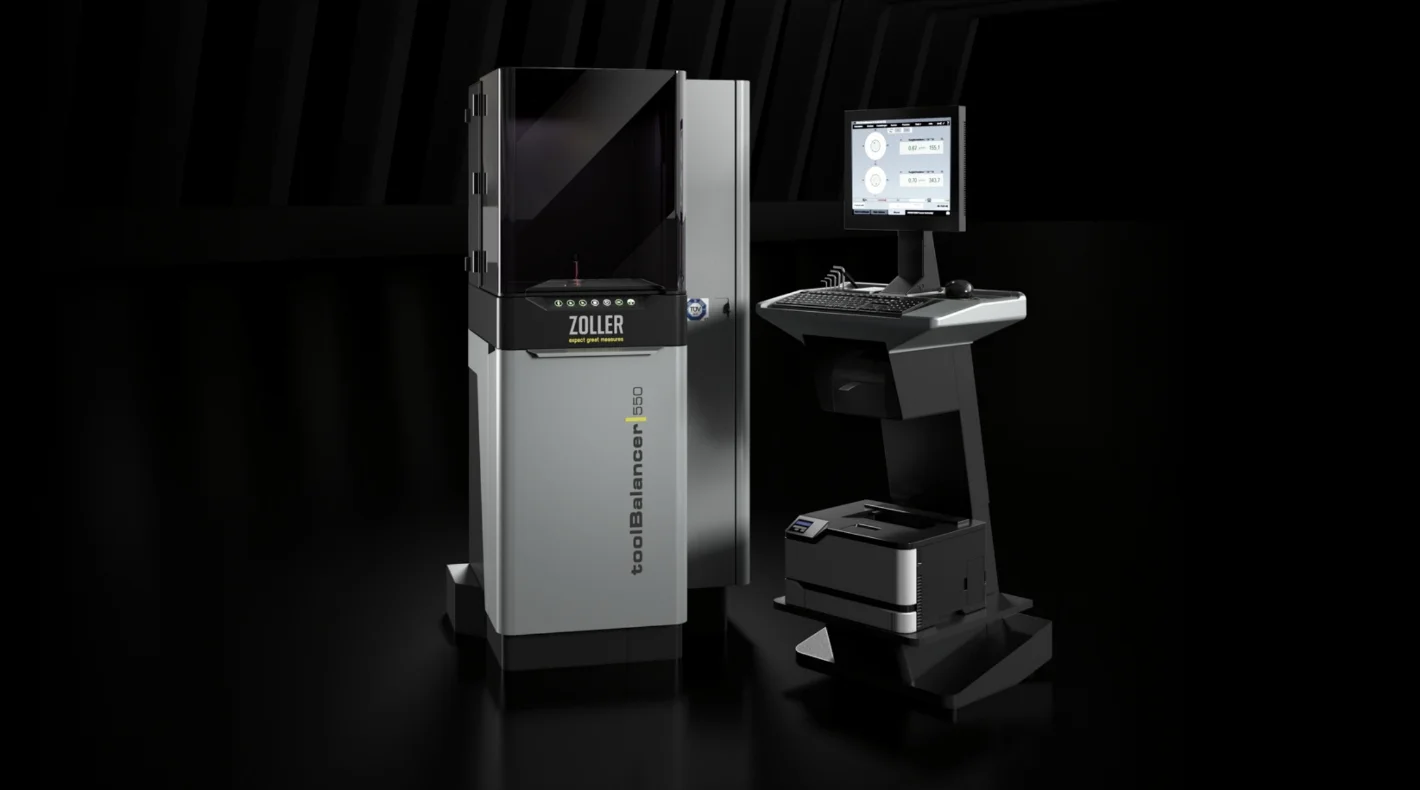
Surprisingly few manufacturing operations address the issue of tool balancing. Yet balancing is the start point for precise manufacturing. The »toolBalancer« from ZOLLER is the perfect solution and delivers measurement results of < 0.4 gmm.
Anyone who’s ever ridden a carousel knows the effect: the faster the ride, the stronger the pull outward. Centrifugal force takes hold and pulls the body away from the center. What’s just a short thrill for us at the fair is an everyday occurrence for rotating tools—albeit with a problematic side effect: unbalance. If a tool’s center of mass doesn’t lie exactly on the axis of rotation, the centrifugal forces become unbalanced. The tool is pulled off-center, and the production quality falls outside the optimal range.

Nelu Bilba, a manufacturing expert at ZOLLER Inc., the U.S. subsidiary of ZOLLER, makes the point: “Every tool should be balanced. The positive effects are impressive.” At the same time, he clears up a common misconception: “Speed isn’t the decisive factor for balancing. As soon as masses start rotating, unbalances become apparent. This is completely normal and applies whether the speed is 500 or 15,000 revolutions per minute.”
Before Nelu Bilba joined ZOLLER, he gained in-depth knowledge of many manufacturing processes. His conclusion: “The effects of unbalanced tools are massively underestimated. Yet the consequences are clearly evident: unbalance generates vibration, and vibration results in uneven forces acting on the cutting edge, the workpiece, the insert seat, and the spindle. The entire precision chain comes under stress.”
More vibration in the tool—more risk in manufacturing
The main cause of unbalance lies in the typical multi-part design of a complete tool. Individual components, such as tool holders and clamping devices, are usually pre-balanced or even precision-balanced. Together, they form a well-balanced subsystem. However, when indexable inserts are fitted, a completely new situation arises.
Even low differences in the weight of the cutting inserts cause an unbalance in the overall system and increase its sensitivity to vibrations. The potential for problems increases additionaly if the balancing quality of the holder and the device for holding it are only average.
As soon as the machine spindle starts moving and picks up speed, the tool begins to vibrate. The higher the speed, the greater the effect of the unbalance: double the speed means four times the centrifugal force. As the turn velocity gradually increases, the stresses on all components rise sharply.
»toolBalancer«: Detection and Correction of Unbalances
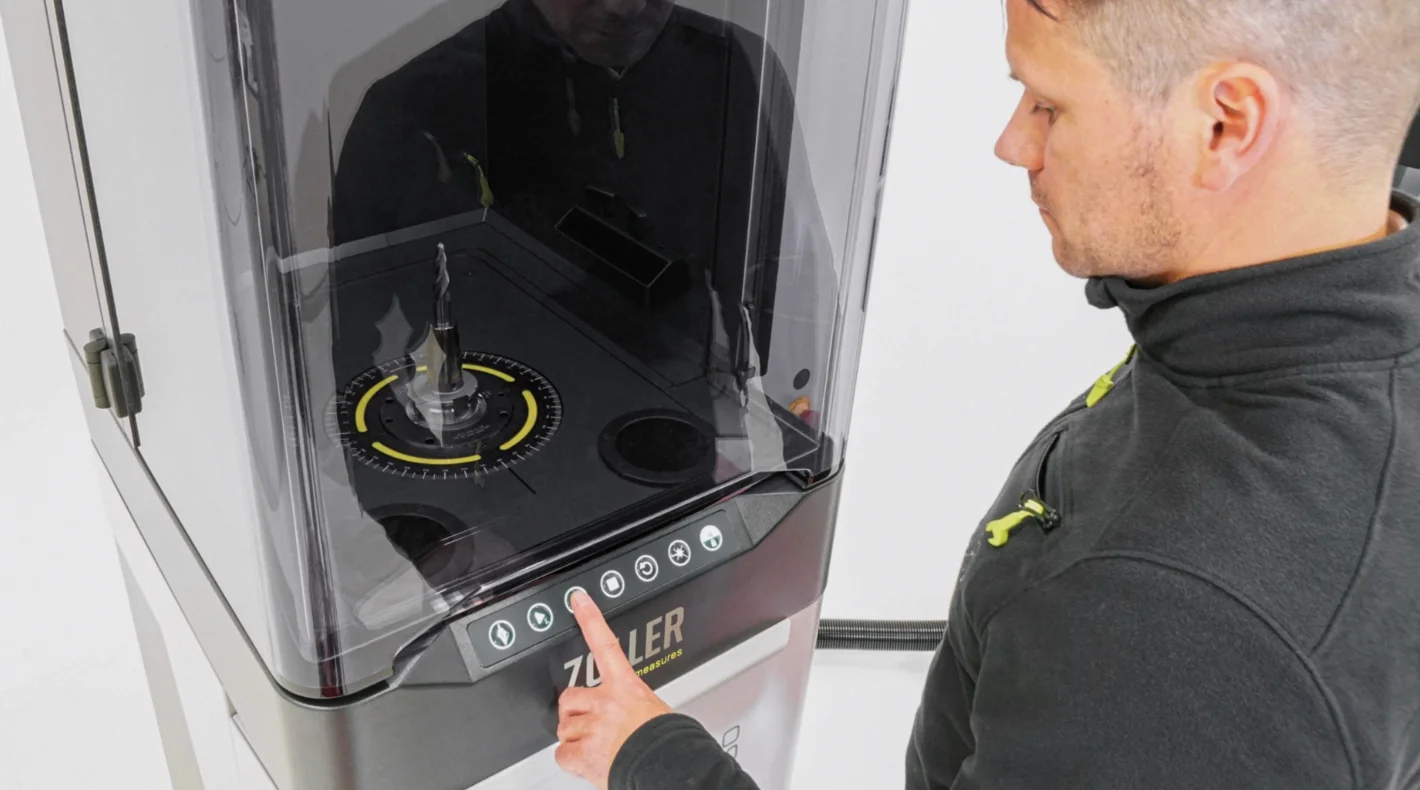
Balancing tools precisely is just as important for machining quality as presetting and measuring. That is why ZOLLER has devoted extensive effort to determining how to detect and correct unbalances quickly, simply, and with high precision. The answer: »toolBalancer«—a balancing machine featuring state-of-the-art measuring technology, technologically advanced, and exceptionally precise. “I don’t know of any balancing machine that’s approximately as ergonomically designed and simple to use,” explains Nelu Bilba.
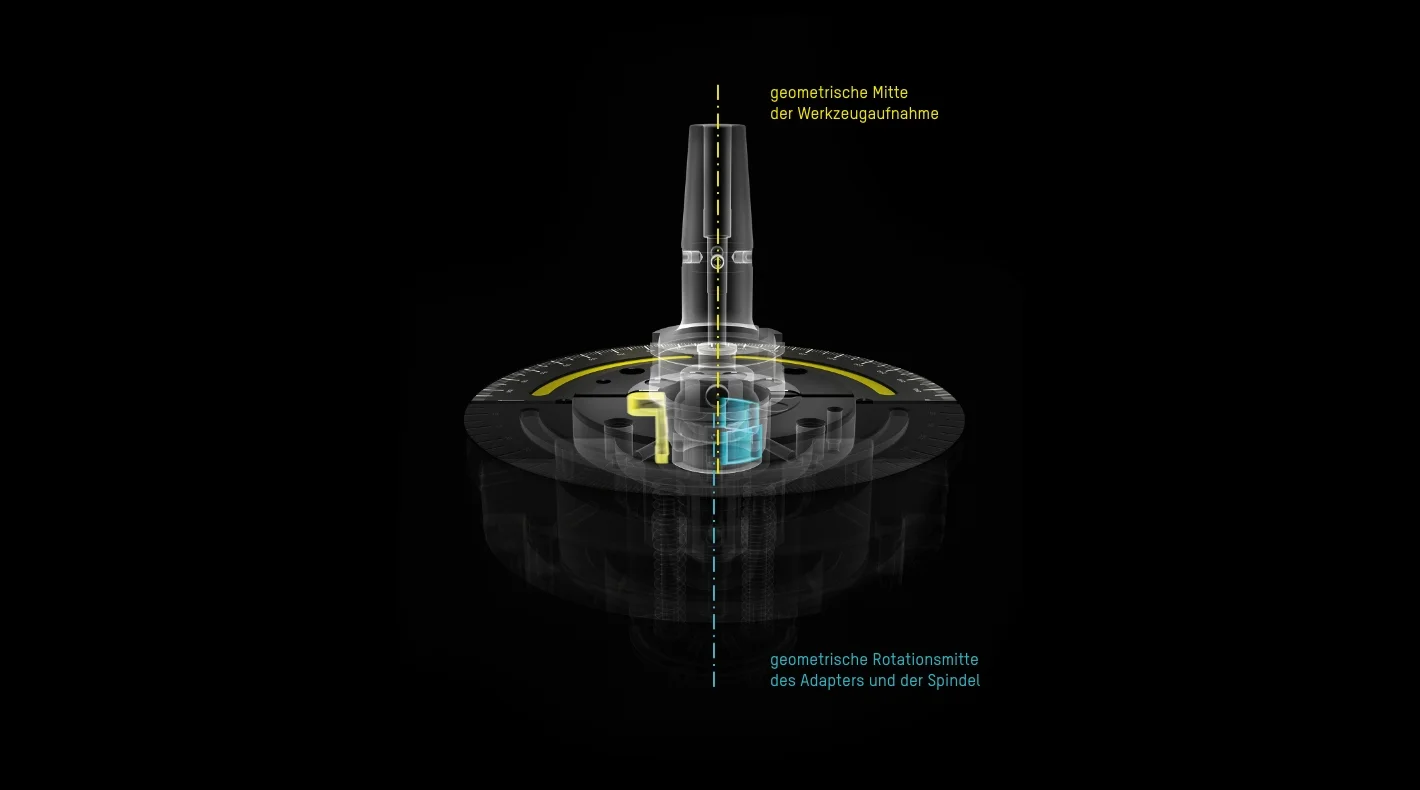
The ZOLLER developers broke new ground with the »toolBalancer« to achieve first-class measurement results. The device works with specialized balance adapters that specifically generate a center offset. This introduces a defined additional unbalance to precisely measure the actual unbalance in the tool. This clever principle generates a strong sensor signal that enables highly accurate evaluation—with final measurement results below 0.4 gmm.
Spindle damage, machines that fail, skyrocketing costs
“The negative effects of unbalance on tools and machines can be significant. And that’s not even mentioning workpiece quality. Balancing is fundamentally important for process reliability and machine availability alone,” emphasizes Nelu Bilba. In his many years of experience, he has seen on multiple occasions how unbalances have caused extensive damage to machines: “I know of cases where the spindle of a new machine failed after six months. On another machine, the spindle had to be overhauled four or five times in 15 years—at a total cost of several hundred thousand U.S. dollars. The cause was always the same: tools that were never balanced.” The result: long downtimes, high repair costs, and significant production failures.
Improve Quality, Reduce Costs
Regular balancing not only reduces risks but also lowers costs. “One of our customers in the aviation industry has doubled the tool life this way,” reports the ZOLLER expert. It also reduces scrap because balancing can avoid vibration-related quality defects in the workpiece. This pays off especially when it comes to surface finish: Anyone who wants to consistently produce at the highest level has no choice but to balance grinding wheels, reamers, or finishing tools. “I’d even go a step further,” adds Nelu Bilba, “Balancing is a fundamental requirement for further developing internal manufacturing standards, regardless of whether the process involves milling, drilling, roughing, finishing, or grinding.”
Perfectly Prepared for Extreme Requirements
Even with high-performance processes such as high-speed cutting (HSC), balancing is essential. To reliably meet the required balance grades of G=2.5 or better, a check on the »toolBalancer« is indispensable. This small intermediate step is well worth the effort. It ensures that manufacturing operations can fully exploit the potential of the process, the tool, and the CNC machine.
Balancing quality: often the weakest link in the process chain
“Anyone who consistently aligns their processes with quality—from tool procurement to presetting & measuring, all the way to investing in a top-of-the-line CNC machine—should not skimp on balancing. Otherwise, balancing quality remains the weakest link in the chain. It can significantly compromise quality, increase costs, and undermine process reliability. For me, balancing is the start point for production quality,” concludes Nelu Bilba.

 Back to overview

Select language
Europe